Resume Example · Aged Care
Aged Care Support Worker Resume Example (Australia)
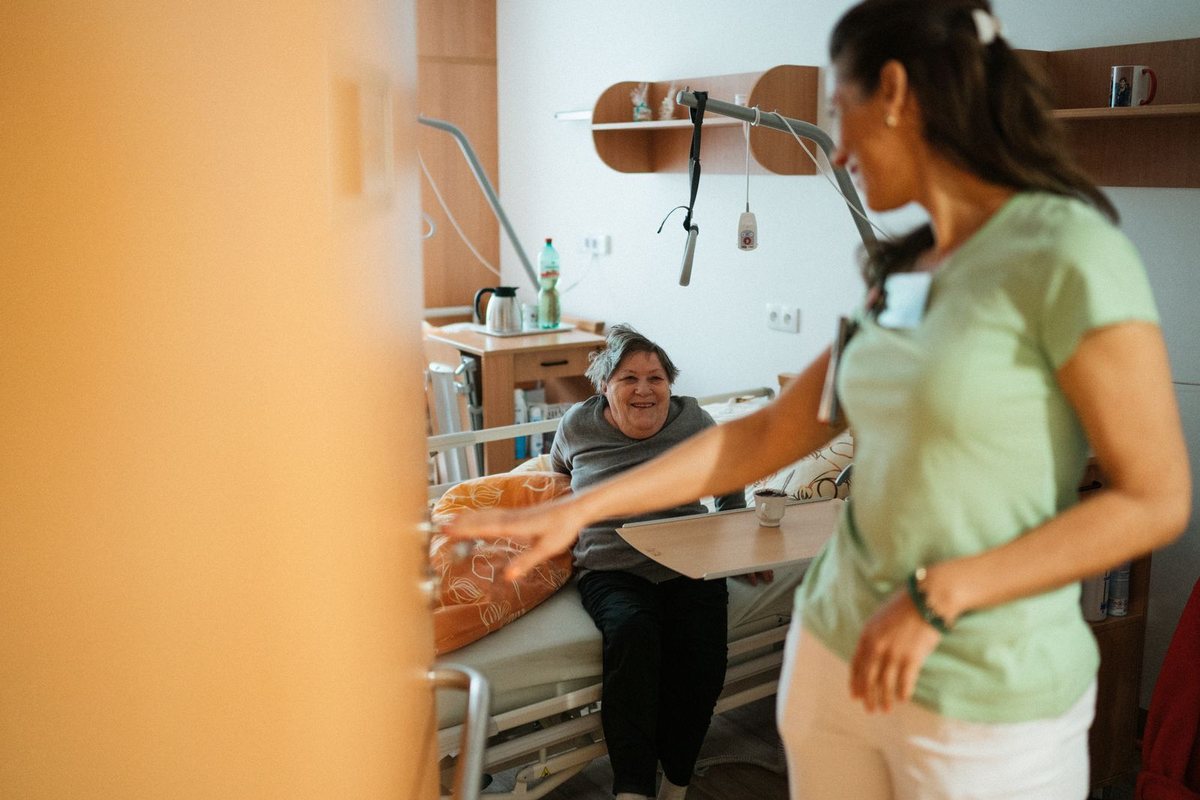
Photo via Pexels
The short answer: a strong aged care resume puts your Certificate III in Individual Support, current police check and manual handling training in the first half-page, then proves personal care, dementia support and documentation with resident numbers in every bullet. The worked example below shows the full layout — copy the structure and replace every detail with your own experience.
Key takeaways
- Lead with your Certificate III in Individual Support, current police check and manual handling training — they belong in the first half-page.
- Prove personal care, dementia support and documentation with resident numbers in every bullet.
- Name the settings you have worked in — residential, home care, respite — so a rostering manager can place you quickly.
- Show your roster pattern plainly: aged care employers hire for availability as much as for skills.
Resume support
Three things on this page, in order:
- Copy the blank template — the layout, with brackets showing what goes where.
- Read the worked example — the same template, filled in for a fictional applicant.
- Use the tips and keywords — what to include, and the exact terms employers screen for.
In this guide: a blank template to copy, the full worked example, why it works, the ATS keywords aged care employers search for, and how to frame rosters.
In this article
The full example resume
This example is for a support worker with two years in residential aged care applying for permanent morning and afternoon shifts. Names and facilities are illustrative — replace them with your own. Notice what is left out: no photo, no date of birth, no full home address, and no vague claims about being a caring person without the tasks to back them up.
Blank template — copy and fill in
[Your Full Name]
[Job title — the role you are applying for]
[Suburb, State] · [Mobile] · [Email]
Professional Summary
[3–4 sentences: your role and years of experience + the setting you work in + your strongest evidence, with numbers where you can + the role you are applying for.]
Certificates & Compliance
- [Certificate III in Individual Support (Ageing) — provider, year]
- [Police check — date issued]
- [First Aid and CPR — currency dates] · [Manual handling training — provider, year]
Professional Experience
Write every bullet as: (Strong verb) + what you did + outcome or measured result.
- [Strong verb] + [the task] + [a number, load, volume or result]
- [Strong verb] + [a second core duty] + [who it helped or what it improved]
- Roster line: [your shift pattern — for example, rotating roster across days, evenings and nights]
Education
- [Relevant qualification — provider, year]
- [Short courses — dementia support, manual handling, infection control]
Referees
Available on request — [name the types of referees you can offer, for example your supervisor and a senior colleague].
The worked example, filled in
About this example: it is built from real job ads and award requirements for the role; the person is fictional.
Emma Collins
Aged Care Support Worker — Residential & Dementia Care
Palmerston NT · 0400 000 000 · emma.collins@example.com · Driver licence & own vehicle
Professional Summary
Certificate III qualified aged care support worker with 2+ years in a 90-bed residential facility, including 12 months in a secure dementia support unit. Provide personal care, manual handling, meals and continence support for 10–12 residents per shift, complete progress notes each shift, and report changes in condition promptly to the registered nurse on duty. Hold a current National Police Check, first aid certificate and manual handling training. Seeking a permanent part-time role with regular morning and afternoon shifts.
Certificates & Compliance
- Certificate III in Individual Support (Ageing) — completed 2023
- National Police Check — current · NDIS Worker Screening Check — current
- Provide First Aid and CPR — current · Manual handling training — current
- Influenza vaccination current; COVID-19 vaccination as required by facility policy
- Food handling basics and infection control training completed
Professional Experience
- Support 10–12 residents per shift with showering, dressing, grooming, mobility and toileting, following each resident's care plan and preserving dignity and choice
- Work 3–4 shifts per week in a 24-bed secure dementia unit, using calm redirection, familiar routines and behaviour support plans during episodes of confusion and sundowning
- Use slide sheets, hoists and stand-up lifters for transfers in line with manual handling plans; no resident falls during assisted transfers in the past 12 months
- Assist with meals for up to 12 residents, including modified diets and thickened fluids as directed, and monitor intake for residents flagged for weight loss
- Document personal care, behaviour observations and incidents in progress notes each shift and hand over changes to the incoming team and RN
- Rotating roster across mornings, afternoons and occasional nights, including weekends and public holidays
- Visited 5–6 clients per day in their homes for personal care, domestic assistance, meal preparation and transport to appointments
- Reported hazards, missed medications and changes in mobility to the coordinator the same day and updated visit notes in the client app
Education
- Certificate III in Individual Support (Ageing) — TAFE, 2023, including 120 hours of vocational placement in residential care
Referees
Available on request — Care Manager and Dementia Unit Team Leader contactable.
The model shown is for illustration purposes only, and may require additional formatting to meet accepted standards.
Why this resume works
- Compliance sits near the top. Certificate III, police check, first aid and manual handling are hard screening items in aged care. Putting them in a dedicated section means a recruiter scanning SEEK applications can tick them off in seconds instead of searching your work history for them.
- Resident numbers make the care real. "10–12 residents per shift" and "24-bed dementia unit" tell a care manager exactly what workload you already handle. That is stronger evidence than adjectives like compassionate or dedicated, which every applicant uses.
- Dementia care is described by tasks, not labels. Calm redirection, behaviour support plans and sundowning are the words used in real advertisements and care plans. Naming the tasks shows you understand the work and gives screening software the phrases it searches for.
- Manual handling is specific and safe. Naming slide sheets, hoists and the resident's handling plan signals you can start safely on day one. Employers worry about injury claims, so safe-transfer language earns trust quickly.
- The summary states the roster wanted. Ending with "permanent part-time, morning and afternoon shifts" matches the way aged care roles are actually advertised, and saves both sides a mismatch discovered at interview.
ATS keywords for aged care support workers
Large aged care providers, home care platforms and agencies often search or screen applications electronically before a person reads them. Start with the exact wording in the advertisement you are answering, then check you have covered the common terms below — but only where they are genuinely true for you. Adding dementia care, hoist transfers or medication prompts you have not actually done will unravel at interview or, worse, on the floor.
Spell qualifications out in full at least once — "Certificate III in Individual Support (Ageing)" — because screening searches do not always connect an abbreviation with the full title. Mirror the facility type in the ad as well: residential, home care, respite and dementia-specific roles use overlapping but different language, and matching the right setting helps your application surface. For help condensing these terms into a summary, see our guide to resume summary examples for shift workers.
Framing shift work and rosters
Aged care is rostered around the clock, so say your pattern plainly instead of leaving a manager to guess. End each role with a roster line covering mornings, afternoons, nights, weekends and public holidays, and note your average shifts per week if you are casual or agency. That information is a selling point: it proves you already work the unsocial hours the new role needs. If you are moving from casual shifts to a permanent line, our guide to casual-to-permanent job applications explains how to frame that step, and our page on showing night shift and roster work on a resume covers formatting options for mixed rosters, including sleep-in and active night duties.
Tips for your aged care support worker resume
Short, specific habits that make the difference on applications for these roles:
Tip: Put your police check and first aid currency dates where a coordinator can see them without scrolling.
Tip: Write dementia support specifically — behaviour support, redirection, family communication — rather than “cared for residents”.
Tip: If you have completed medication competency assessments, name them; they separate you from new starters.

The bottom line
Certificates and checks in the first half-page, then resident numbers and settings in every bullet. If a rostering manager can see what you are cleared for and where you have worked within thirty seconds, the format has done its job — now make it yours.
Frequently asked questions
Do I need a Certificate III to work in aged care in Australia?
Most residential aged care employers ask for a Certificate III in Individual Support (Ageing) or an equivalent qualification, or expect you to be working towards one. Some home care and entry-level roles accept experience and a police check while you study, so read each advertisement carefully and list any units you have already completed.
Should I put my police check and vaccinations on my resume?
Yes. List your National Police Check, influenza vaccination and any other checks the advertisement names in a clear compliance section near the top. Aged care employers must verify these before you start, and showing they are current removes a common reason good applications stall.
How do I describe dementia care experience on a resume?
Name the setting and the practical tasks: supporting residents in a secure dementia unit, using calm redirection during sundowning, following behaviour support plans and documenting changes for the registered nurse. Specific tasks and resident numbers are far more convincing than a general claim that you are good with dementia care.
How long should an aged care resume be?
One to two pages is right for most support workers. Use two pages if you have several years across residential and home care; use one focused page if you are newly qualified, leading with your placement hours, certificate units and compliance checks.
How do I show casual and agency aged care shifts?
List the agency or labour hire company as your employer and name the facility types and resident groups underneath. Add your usual shift pattern and average hours per week so a roster manager can see you are already working the hours the new role needs.
Sources (4)
- SEEK Career Advice — Australian resume, cover letter and job application guidance for care roles.
- Fair Work Ombudsman — information on Australian workplace rights, rosters, pay and shift conditions.
- Workforce Australia — Australian Government employment services, job search and training information.
- Safe Work Australia — manual handling and workplace safety guidance for care work.
Read more
 Disability Support Worker Resume Example — NDIS-screened, person-centred support work with community access experience.
 Registered Nurse Resume Example — AHPRA registration, ward bullets and clinical ATS keywords.
 Showing Night Shift & Roster Work on a Resume — how to make your roster experience a selling point.